




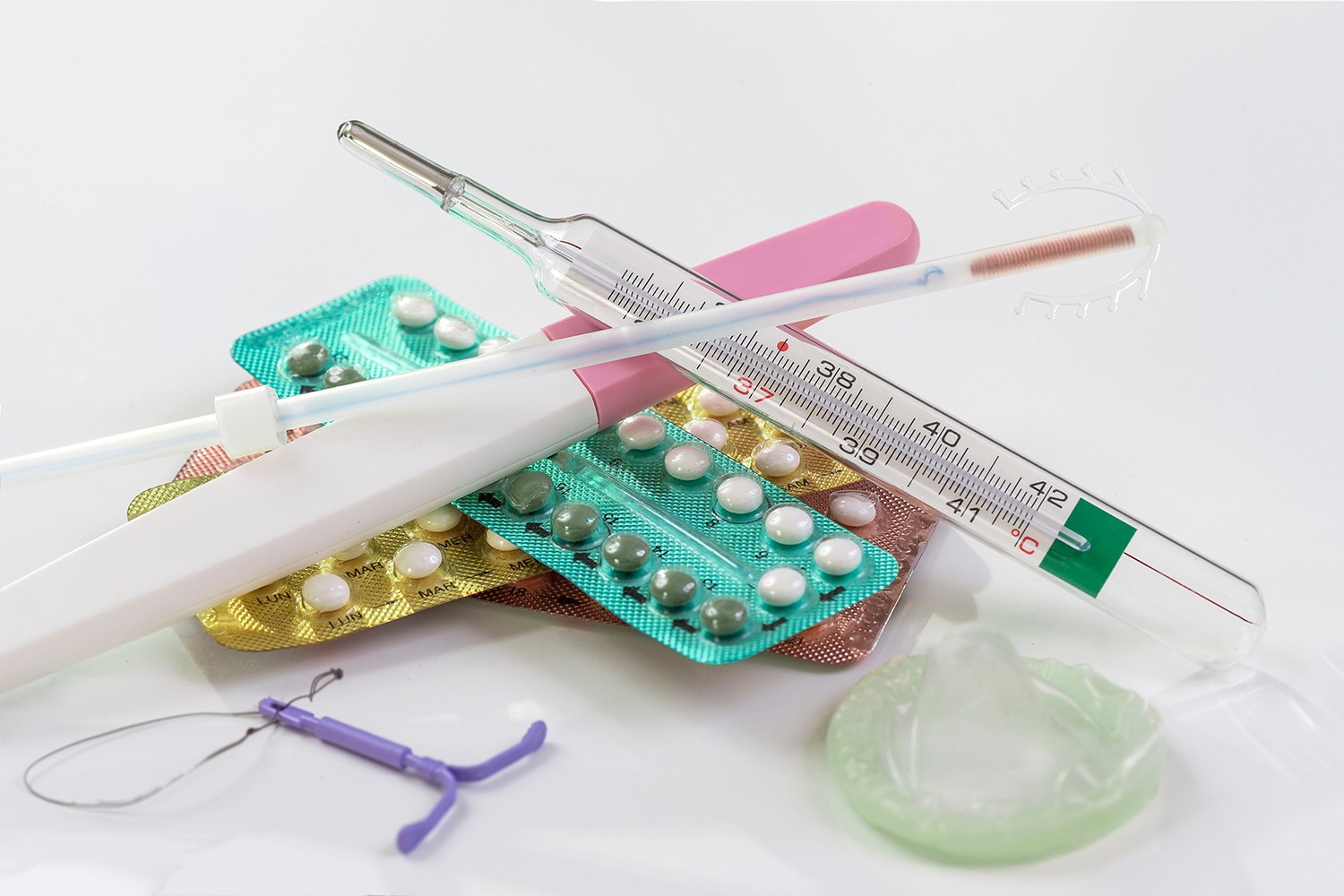
Many women don't want to use hormonal contraceptives such as the Pill so knowing what alternative methods are available, and their benefits and side effects, is important for both women and men
Choosing the right contraception is an important decision, after all, women typically spend 30 years of their life trying to avoid pregnancy [1]. Many women decide to change their contraception method at some point in their lives – the most common reasons are because of unwanted side effects with synthetic hormonal contraceptives (such as effect on mood, bleeding and impact on sex life), wanting to choose a non-hormonal method, and wanting to become pregnant [2].
Although people refer to the contraceptive pills, implants, injections, patch, vaginal ring and coil as “hormonal contraceptives” it is worth knowing that these do not contain hormones. They contain synthetic chemicals which are similar but different to hormones so block the action of hormones on the brain and body.
This article will purely focus on non-hormonal methods.
Copper coil (IUD)
With more than 200 million users worldwide, the copper intrauterine device (copper IUD or coil) is the most popular, non-hormonal, long-acting and reversible form of contraception [3]. It is a small, T-shaped plastic device that has areas coated in copper, and it doesn’t contain any hormones.
The copper coil is inserted into your uterus by a doctor or nurse. The copper prevents sperm from surviving in your cervix or womb, which means they are unable to reach an egg. In the rare event that sperm survives and reaches an egg, the presence of the IUD can stop a fertilised egg from implanting. Once removed, your fertility will usually return to normal.
The copper coil is suitable for most women and is popular with those who can’t, or don’t want to, use hormonal contraception. It can also be fitted as an effective form of emergency contraception if you have had unprotected sex. When fitted correctly, it is more than 99% effective. A copper coil does not protect you from sexually transmitted infections.
When using a copper coil, your periods should come at the usual time but they may get longer, heavier or more painful in the first 3-6 months. You may also get some spotting or bleeding in between periods, and may have a slightly increased risk of getting recurring thrush. The copper coil can stay in place for up to ten years, depending on your age and the type of coil fitted.
Women can still be prescribed bioidentical hormone treatments (such as for PMS, PMDD, PCOS / PMOS and perimenopause) if they have the copper coil in place. Women who are prescribed bioidentical progesterone often have lighter periods.
Alternative copper IUDs
There are some different types of copper IUDs, although they are not ask well known or readily available.
For instance, Gynefix is a small, frameless, adaptive copper IUD (rather than T-shaped) that lasts five years. In the UK it’s not available on the NHS – it is usually only available at private clinics. It does not have FDA approval in the US but is available in some European countries.
The IUB Ballerine is a small spherical device that features 17 copper beads. Like the Gynefix, it lasts five years. It is licenced in selected countries in Europe, Canada, South Africa and Israel but not in the US or UK.
Male condom
Condoms are made of thin latex (or latex-free polyurethane) and are designed to cover the penis to stop sperm coming into contact with your vagina when having sex. This means they protect against pregnancy and sexually transmitted infections – in fact, condoms are the most effective barrier method to lower your risk of getting an STI.
Globally, 21% of people using contraception use condoms [4]. They are readily available, affordable and only need to be used when you are having sex (other forms of contraception such as the Pill need to be taken every day while the diaphragm needs to be left in for hours afterwards). They are also 98% effective when used correctly.
While they have no serious side effects, barrier methods of contraception have the lowest satisfaction rating (only 62% of women in England reported being very satisfied with them). Sometimes condoms can split or slip off, which means you may need emergency contraception. If you are using lubricant, choose a water-based or silicone-based one. Oil-based products, including coconut oil and some moisturisers, can damage latex and cause condoms to split.
Condom use among sexually active adolescents has declined significantly since 2014, with the UK having some of the lowest condom use [5]. Lack of education and access to condoms are thought to contribute to the decline, and an increase in the reliance of the withdrawal method.
Withdrawal method
The withdrawal method, also known as “pulling out”, is when the penis is taken out of the vagina before ejaculation to prevent sperm entering your vagina.
It is not a very effective method of contraception – it is only 78-80% effective – because pre-ejaculation fluid contains sperm and sperm can also enter your vagina if withdrawal is incorrectly timed. It also offers no protection against sexually transmitted infections. This method has the lowest satisfaction rating – only 58% of women in England were satisfied with it.
Despite this, use of the withdrawal method is on the increase – dissatisfaction with alternative forms of contraception, convenience and lack of cost are driving its rise.
Fertility awareness methods
Hormone-free fertility awareness methods of contraception include period tracking app or using a calendar to calculate ovulation or peak fertility. Tracking methods can include daily recording of your body temperature, details of your vaginal discharge and timings of your periods. During your fertile period, you either avoid penetrative sex or use a condom (or other method).
When correctly used, fertility awareness methods are between 91% and 99% effective in preventing pregnancy, but if not followed correctly can be only 76% effective. They do not protect against sexually transmitted infections.
There has been an increase in use of fertility awareness methods, often due to dissatisfaction with other methods of contraception, concerns about the risks of synthetic hormonal contraceptives and a desire to use “natural” family planning methods.
It is more difficult to use this method if you have an irregular cycle or are perimenopausal.
Female sterilisation
Female sterilisation is a permanent form of contraception – it involves blocking or cutting the fallopian tubes to prevent sperm reaching an egg. It is more than 99% effective at preventing pregnancy but it offers no protection again sexually transmitted diseases.
Female sterilisation does not usually alter or stop you from having periods, and some women find their periods may become heavier. It might be suitable if you do not want any (more) children and you should be offered counselling to help you decide whether you want sterilisation, especially as it is not reversible.
Many women find it liberating not to have to consider contraception again after sterilisation.
Male sterilisation
Also known as a vasectomy, male sterilisation is a permanent form of contraception – it involves cutting or sealing the tubes that carry sperm so that is not ejaculated from the penis during sex. It is more than 99% effective at preventing pregnancy. It offers no protection again sexually transmitted diseases.
Although it may be possible to reverse a vasectomy, it is not always effective.
Cap or diaphragm
Contraceptive caps and diaphragm are circular domes made of silicone or latex that are placed in your vagina before sex to cover your cervix. They work by preventing sperm from entering your womb and are used alongside spermicide – a gel, foam or cream that kills sperm. After sex, they need to be kept in for at least six hours.
Caps and diaphragms come in different sizes – a cap is smaller than a diaphragm and may be less effective if you’ve given birth. A doctor or nurse will check the size you need and can advise you on how to use it. They usually last one year. When used correctly, they are thought to be 92%-96% effective.
Caps and diaphragms do not protect you from sexually transmitted infections.
Diaphragms and caps were popular in the UK and US in the 1930s-1950, but their usage has significantly dwindled (only 0.1% of women in England use them today [2]) despite them being effective for many women.
Sponge
Like the cap and diaphragm, the contraceptive sponge, which is made of plastic foam, is inserted into your vagina before sex. It covers your cervix to block sperm getting into your womb and contains spermicide. It’s single use – one sponge can be used for up to 24 hours and you must leave it in for at least six hours after sex.
Due to low demand, the sponge is no longer available in the UK. It is marketed as Today Sponge in the US.
Female condom
Also known as an internal condom, the female condom is made of thin plastic or rubber and is put inside your vagina before having sex. If used correctly it is up to 95% effective at preventing pregnancy, and it also protects against sexually transmitted infections.
Use of female condoms is relatively low – worldwide the female condom only accounts for 1.6% of total condom usage [6]. Their high cost, limited availability, user difficulty, and partner reluctance are all thought to contribute to their low usage.
Ph-altering gel
Also known as birth control gel, Ph-altering gel is a non-hormonal gel that is applied vaginally to create an acidic environment that’s inhospitable to sperm. It is different from spermicide, which destroys sperm, as Ph-altering gel alters the acidity of your vagina to immobilise sperm so they cannot travel into your uterus to fertilise an egg.
In the US, the FDA has approved a Ph-altering gel, Phexxi, but it is not currently available in the UK, which has options such as ContraGel and Caya Gel, both of which need to be used alongside a barrier method such as condoms.
When used correctly, Phexxi is 93% effective, but 86% effective in typical use. Possible side effects include burning sensation in the vulva and vagina, itching, yeast infections and UTIs. The gel is considered gentler than spermicides, which can destroy the cells in the vaginal wall.
The gel can be used on demand, and is single use. It offers no protection again sexually transmitted diseases.
Knowing your options
Although there is a range of effective contraception, the high prevalence of unplanned pregnancies and rising abortion rates indicate that not all women are finding the right contraception for them [2]. Discuss your individual needs with your healthcare professional and talk with your partners about their sexual health history - consider getting tested before you start having sex in a new relationship.


